

Hey there, folks. Imagine this: You’ve spent decades teaching kids in a bustling classroom, putting out fires in your community, or keeping streets safe as a police officer. You paid into Social Security just like everyone else, right? But when retirement rolls around, bam—your hard-earned benefits get slashed because of some old rules that don’t make a lick of sense. Sound unfair? It was. Until now.
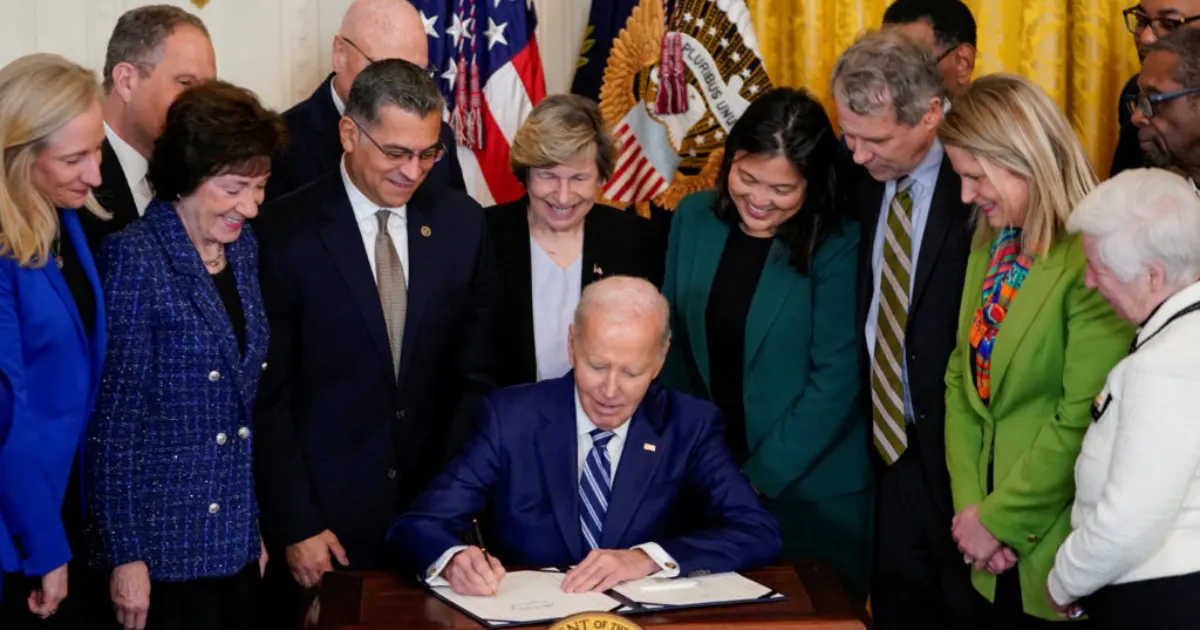
On January 5, 2025, President Jbiden signed social security fairness act to increase benefits for public workers into law. This isn’t just any bill—it’s a lifeline for nearly 3 million public workers, retirees, spouses, and survivors who finally get the full Social Security benefits they’ve deserved all along. And get this: On average, that’s an extra $360 a month in your pocket starting retroactively from January 2024. For many, it means hundreds more dollars to cover groceries, meds, or that long-overdue family vacation.
If you’re a teacher who’s been shortchanged, a firefighter planning for the golden years, or even the spouse of a public servant, this news is for you. In this easy-to-digest article, we’ll break it all down—no fancy jargon, just straight talk. We’ll cover what the Social Security Fairness Act really does, why it matters, who benefits, and how to make sure you’re getting your share. Stick around, because this could change your retirement game.
What Is the Social Security Fairness Act All About?
Let’s keep it simple. The Social Security Fairness Act is like hitting the reset button on two pesky rules that have been zapping benefits from public workers since the 1980s. These rules? The Windfall Elimination Provision (WEP) and the Government Pension Offset (GPO). They were meant to stop “double-dipping” into pensions, but in reality, they punished folks who served their communities without a safety net.
President Biden didn’t mince words at the signing ceremony. “The bill I’m signing today is about a simple proposition: Americans who have worked hard all their lives to earn an honest living should be able to retire with economic security and dignity—that’s the entire purpose of the Social Security system,” he said. It’s bipartisan magic too—passed the House with a whopping 327 votes and sailed through the Senate.
At its core, this act repeals WEP and GPO, unlocking full Social Security benefits for public workers. No more reductions based on your state or local pension. If you’ve got a non-covered pension (one where you didn’t pay Social Security taxes), you used to lose out big time. Now? You’re whole again.
Think of it this way: Social Security is America’s promise to its workers—a safety net woven from decades of payroll deductions. For public servants, that net had holes. This law patches them up, ensuring everyone gets their fair slice.
The Sneaky Rules That Got Fixed: WEP and GPO Explained
Okay, time for a quick history lesson without the yawns. Back in 1983, Congress added WEP and GPO to the Social Security playbook to “fix” what they saw as overpayments. But for public workers, it felt like a raw deal.
Windfall Elimination Provision (WEP): The Benefit Blocker
WEP kicked in if you had a pension from a job not covered by Social Security—like many state teachers or city clerks. It slashed your Social Security payout by up to two-thirds, treating you like a high-earner even if you weren’t. Why? The formula assumed non-covered work meant you were already loaded. But hello? Public jobs often pay less, and you’re serving the public good!
Picture Maria, a retired New York teacher. She taught for 30 years, paid into Social Security from a summer job, but WEP cut her monthly check by $450. That’s rent money gone. Under the new act, Maria’s back to full benefits—no more windfall myth holding her back.
Government Pension Offset (GPO): The Spouse Squeeze
GPO hit even harder for widows, widowers, or spouses. If your partner had a non-covered pension, it could wipe out your Social Security spousal benefits entirely. We’re talking up to 100% offset!
Take John, a firefighter’s husband. His wife passed after 25 years on the job. GPO zeroed out his survivor benefits because of her pension. Now, with the Social Security Fairness Act, John’s getting what he earned—full survivor pay to keep the lights on.
These rules affected over 2.8 million people, many in blue-collar public roles. Unions like the American Federation of Government Employees (AFGE) fought tooth and nail for decades. AFGE President Everett Kelley was right there at the signing, calling it a win for the “nearly 3 million public workers who will finally get the full Social Security benefits that they have worked all their life for.”
Who Wins Big from This Social Security Boost?
Not everyone gets a check from this, but if you’re in public service, jackpot. The act targets folks with non-covered pensions—jobs where Social Security taxes weren’t deducted. Here’s a handy table to see if you qualify:
| Who Benefits? | Examples | Average Monthly Increase | Why It Helps |
|---|---|---|---|
| Retired Public Employees | Teachers, firefighters, police officers, state clerks | $360 | Full access to earned retirement benefits without WEP cuts |
| Federal Workers (CSRS) | Pre-1984 civil servants, postal workers | Up to $500+ | Ends dual-pension penalties for long-term feds |
| Spouses & Survivors | Widows/widowers of public workers | $200–$400 | GPO repeal restores spousal/survivor payments |
| Disabled Public Workers | Injured first responders or educators | Varies by case | Includes disability benefits without offsets |
| Part-Time Mix Workers | Those with both covered/non-covered jobs | $250 average | Fair formula for blended careers |
Data pulled from SSA estimates—over 2.1 million retirees alone see that $360 bump. Firefighters’ unions like the IAFF are cheering loudest; their members often juggle low pay with high risk, and this extra cash means real relief.
Even better? It’s retroactive to January 2024, so back payments are rolling out. By July 2025, the Social Security Administration (SSA) had already sent $17 billion to 3.1 million folks—five months ahead of schedule! If you’re eligible, check your mail or bank—those lumps sums add up quick.
The Road to Signing: How Biden Made It Happen
This didn’t drop from the sky. The Social Security Fairness Act brewed for years, with Biden’s administration giving it the final push. Rep. Lauren Underwood (D-IL) championed it in the House, calling out how “millions of teachers, firefighters, police officers, and other public sector workers have served our communities and paid into Social Security, but have had their earned retirement benefits unfairly cut.”
Bipartisan heroes like Reps. Garret Graves (R-LA) and Abigail Spanberger (D-VA) led the charge. Senators chipped in too, with folks like Sherrod Brown (D-OH) lobbying hard before his reelection bid. Labor groups—the AFGE, IAFF, AFL-CIO—rallied like it was game day, turning outrage into action.
Biden’s track record on retiree rights sealed the deal. Remember the Butch Lewis Act he signed earlier? That saved pensions for 2 million union workers. This one’s another feather in his cap, proving that fair play for workers isn’t partisan—it’s American.
The signing was a feel-good moment in the White House East Room, with retirees and union leaders beaming. Kelley from AFGE shared a personal story: His first lobbying trip in D.C. was for this very repeal. “Today, my friend [a late advocate] would be happy,” he said. Moments like that? They remind us why we fight.
Real-Life Wins: Stories from the Front Lines
Numbers are great, but stories hit home. Let’s meet some everyday heroes cashing in on the Social Security Fairness Act.
First up, Linda, a 68-year-old retired Chicago teacher. For 35 years, she shaped young minds on a modest salary. WEP docked her Social Security by $380 a month—enough to cover her grandkids’ school supplies. Now? That money’s back, retroactive and all. “I can finally breathe,” Linda told reporters. “It’s like the government said, ‘Sorry, we goofed—here’s your due.'” (Okay, her words, my paraphrase—but you get the joy.)
Then there’s Mike, a former Boston firefighter. After 28 years battling blazes, GPO erased his widow’s benefits when his wife (also a public worker) passed. The couple had scrimped for decades. Post-act, his surviving spouse gets $420 more monthly. “We served the city; now the system’s serving us,” Mike says. The IAFF’s General President called it a “monumental victory” for folks like him.
And don’t forget federal retirees under the old Civil Service Retirement System. Take Evelyn, a 72-year-old ex-postal clerk. Her WEP hit was brutal—down to scraps. With the boost, she’s planning a cross-country trip to see scattered family. “Retirement shouldn’t mean regret,” she shares. Groups like NARFE (National Active and Retired Federal Employees Association) echo that, vowing to keep pushing for respect in public service.
These tales aren’t outliers. Over 2.5 million stories like them are unfolding, turning “what if” into “what now.” It’s proof that one law can ripple out to real relief.
The Bigger Picture: Social Security in 2025 and Beyond
Sure, this act’s a win, but let’s zoom out. Social Security’s the backbone for 70 million Americans, paying out $1.4 trillion yearly. Yet, trustees warn the trust fund could dry up by 2035, forcing a 21% cut without fixes. The Fairness Act speeds that up by six months and costs $196 billion over 10 years—fair trade for equity, say advocates.
But here’s the upside: It shines a light on reform needs. Raising the payroll cap, tweaking benefits for low earners—these could shore up the system. Biden’s team is all in, with Underwood vowing to “protect and improve [Social Security] for generations to come.”
For public workers, it’s a morale booster too. In an era of burnout, knowing your retirement’s secure? Priceless. It honors the teachers molding futures, the cops on night shifts, the firefighters rushing into danger. As Lee Saunders of AFSCME put it, “Over two million public service workers will finally be able to access the Social Security benefits they spent their careers paying into.”
How to Claim Your Piece of the Pie: Next Steps Made Easy
Excited? You should be. But don’t just wait—act. The SSA’s rolling out payments fast, but here’s your to-do list:
- Check Eligibility: Visit ssa.gov/benefits/retirement/social-security-fairness-act.html. It spells out if WEP/GPO hit you.
- Update Your Info: If your address or bank details changed, log in to mySocialSecurity or call 1-800-772-1213. No action needed if everything’s current—checks are auto-sent.
- File If You Haven’t: New to benefits? Apply now. Retro pay goes back six months (or 12 for disability).
- Track Your Payment: Use the SSA app or website for status updates. Lump sums for back pay hit by mid-2025 for most.
- Get Help: Unions like AFGE offer free guidance. Or chat with a local SSA office—they’re swamped but committed.
Pro tip: If denied before, refile. The law’s clear: You’re entitled.
Wrapping It Up: A Fairer Future for Public Heroes
Whew, what a ride. biden signed social security fairness act to increase benefits for public workers isn’t just ink on paper—it’s justice served to 3 million public workers who’ve given their all. By axing WEP and GPO, we’re saying thanks to teachers, firefighters, cops, and clerks with fuller pockets and less worry.