
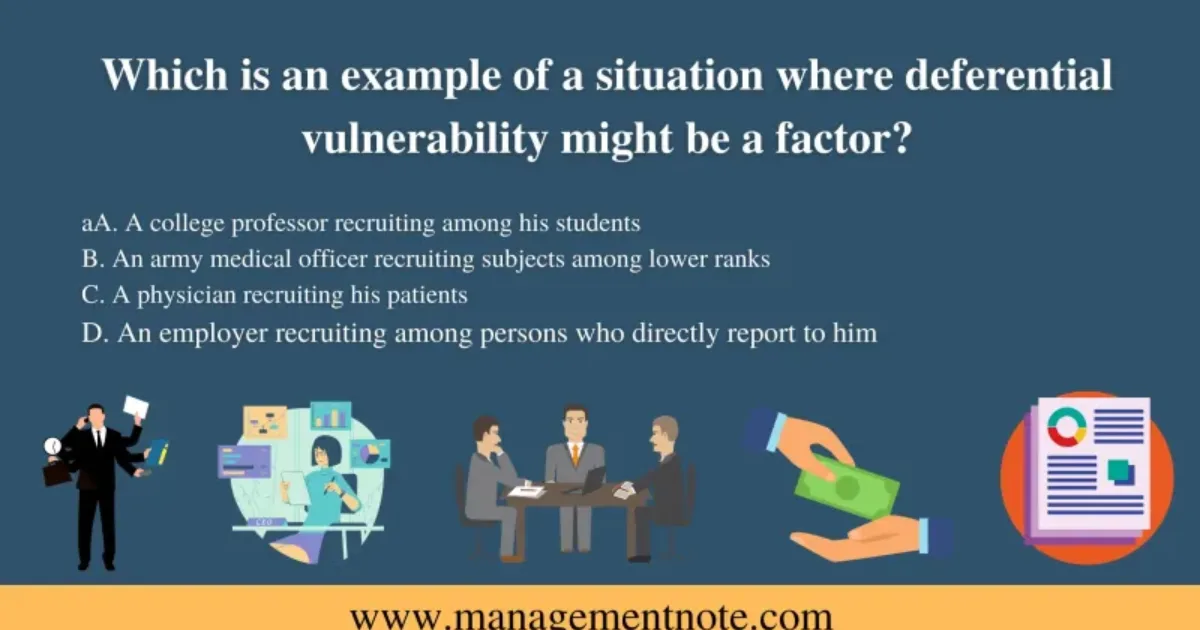

Deferential vulnerability is a concept that might sound complex at first, but it’s really about situations where someone feels pressured to agree or comply because of another person’s authority, status, or influence. It’s a type of vulnerability that can affect decision-making, especially when someone feels they can’t say no due to the power dynamics at play. In this article, we’ll break down what deferential vulnerability means, explore real-life examples of situations where it might be a factor, and explain why it matters—all in a way that’s easy to understand for readers of all ages. Let’s dive in!
Which Is an Example of a Situation Where Deferential Vulnerability Might Be a Factor?
Before we get into examples, let’s clarify what deferential vulnerability is. Imagine you’re in a situation where someone has more power or authority than you—like a boss, a teacher, or even a doctor. Because of their position, you might feel hesitant to question them, disagree, or make your own choices. This hesitation comes from deferential vulnerability. It’s when you feel vulnerable because you’re deferring (or yielding) to someone else’s authority, even if you’re not sure it’s the right thing to do.
This can happen in many areas of life, from healthcare to workplaces to personal relationships. It’s not always about someone being mean or threatening—it’s about the natural pressure we feel when someone has more power or knowledge than we do. Now, let’s look at some clear examples of situations where deferential vulnerability might come into play.
Examples of Situations Involving Deferential Vulnerability
1. A Patient and Doctor Interaction
Imagine you’re at the doctor’s office. The doctor recommends a specific treatment, but you’re not sure it’s the best option for you. Maybe you’ve read about alternative treatments or have concerns about side effects. However, because the doctor is an expert with years of training, you might feel like you have to follow their advice without asking questions. This is a classic example of deferential vulnerability.
Why does this happen? Doctors have specialized knowledge and authority, which can make patients feel like they shouldn’t challenge them. A patient might worry that questioning the doctor will seem disrespectful or that they’ll be seen as difficult. In reality, good doctors encourage questions, but the power dynamic can still make it hard for some people to speak up.
How to Address It: If you’re in this situation, remind yourself that it’s okay to ask questions or seek a second opinion. Doctors are there to help, and most will appreciate your engagement in your own healthcare.
2. An Employee and Their Boss
Picture this: You’re at work, and your boss asks you to take on a project that you know will require working late hours for weeks. You’re already stretched thin, but because your boss has the authority to impact your job, you feel pressured to say yes, even if it’s not in your best interest. This is another example of deferential vulnerability.
In workplaces, employees often feel they need to defer to their supervisors to keep their jobs or avoid conflict. This can lead to overwork, stress, or even agreeing to unethical tasks because of the fear of saying no.
How to Address It: If possible, have an open conversation with your boss about your workload or concerns. You can also seek support from HR or a mentor to navigate these dynamics.
3. A Student and Teacher Relationship
Students, especially younger ones, can experience deferential vulnerability when interacting with teachers or professors. For example, imagine a high school student who disagrees with a grade they received on an assignment. They might feel that challenging the teacher could lead to trouble or being labeled as a problem student. So, they stay quiet, even if they believe the grade was unfair.
Teachers hold authority in the classroom, and students might feel vulnerable because they rely on them for grades, recommendations, or approval. This dynamic can make it hard for students to advocate for themselves.
How to Address It: Students can practice respectfully asking for clarification or feedback. For example, saying, “Can you help me understand how I can improve on this assignment?” opens the door to dialogue without seeming confrontational.
4. A Child and Parent Dynamic
Deferential vulnerability isn’t limited to professional settings—it can happen in families too. For instance, a teenager might feel pressured to follow their parents’ career advice, even if it’s not what they want. If a parent strongly pushes for their child to become a lawyer, but the child dreams of being an artist, the child might feel they have to comply because of their parents’ authority.
This happens because parents often have significant influence over their children’s decisions, especially when the child depends on them for support or approval. The child might worry about disappointing their parents or facing conflict.
How to Address It: Open communication is key. Teens and young adults can try expressing their feelings and goals calmly, perhaps with the help of a trusted adult or counselor to mediate.
5. A Customer and a Salesperson
Have you ever been in a store where a salesperson was very persuasive, and you ended up buying something you didn’t really want? This can be an example of deferential vulnerability, especially if the salesperson seems more knowledgeable or confident than you. For instance, in a car dealership, a salesperson might use technical jargon to convince you to buy a car that’s out of your budget.
The salesperson’s expertise or assertiveness can make you feel like you should trust their judgment over your own, even if something feels off.
How to Address It: Do your research beforehand and set clear boundaries. It’s okay to say, “I need time to think about this,” or to walk away if you’re feeling pressured.
6. Interactions with Law Enforcement
Encounters with law enforcement can also involve deferential vulnerability. Imagine someone being questioned by a police officer. Even if they’ve done nothing wrong, they might feel compelled to answer every question or comply with requests out of fear of consequences. The officer’s authority can create a sense of vulnerability, making it hard to assert one’s rights.
This is especially true in situations where someone isn’t fully aware of their legal rights or feels intimidated by the officer’s presence.
How to Address It: Learning about your rights in advance can help. In many places, you have the right to remain silent or ask for a lawyer, but it’s important to stay calm and respectful to avoid escalating the situation.
Why Deferential Vulnerability Matters
Understanding deferential vulnerability is important because it affects how we make decisions in our everyday lives. When we feel pressured to defer to someone else’s authority, we might not act in our own best interest. This can lead to stress, regret, or even harm in some cases. Recognizing these situations empowers us to take control, ask questions, and make informed choices.
It’s also worth noting that deferential vulnerability can be more pronounced for certain groups, like children, elderly people, or those in marginalized communities. Power imbalances can feel even stronger when someone already feels disadvantaged or less confident.
How to Navigate Deferential Vulnerability
Here are some practical tips for handling situations where you might feel deferential vulnerability:
-
Educate Yourself: The more you know about a topic, the more confident you’ll feel in speaking up. For example, researching medical treatments or workplace rights can give you the tools to ask questions.
-
Practice Assertiveness: It’s okay to say, “I’m not sure about this—can we discuss it further?” or “I need some time to think.” Practice these phrases so they feel natural.
-
Seek Support: If you’re unsure how to handle a situation, talk to a trusted friend, family member, or professional for advice.
-
Trust Your Instincts: If something feels wrong, don’t ignore that feeling just because someone has more authority. Your perspective matters.
-
Know Your Rights: Whether it’s in a legal, medical, or workplace setting, understanding your rights can help you feel more empowered to speak up.
Real-World Impact of Addressing Deferential Vulnerability
Let’s consider a real-world scenario to tie this all together. Imagine a young woman named Sarah who’s at a job interview. The interviewer, who seems very confident and authoritative, offers her a position but says it requires unpaid overtime for the first few months. Sarah feels uncomfortable with this but worries that declining the offer might make her look ungrateful or cost her the job.
If Sarah recognizes this as a moment of deferential vulnerability, she might pause and ask for clarification: “Can you explain how the overtime works and whether it’s standard for all employees?” This simple question could lead to a better understanding of the job or even reveal red flags about the company. By speaking up, Sarah takes control of the situation and makes a more informed decision.
Conclusion
Which Is an Example of a Situation Where Deferential Vulnerability Might Be a Factor? all about the pressure we feel when someone in a position of power influences our decisions. Whether it’s a doctor, boss, teacher, parent, salesperson, or police officer, these situations are common and can affect anyone. By recognizing when deferential vulnerability might be a factor, we can take steps to advocate for ourselves, ask questions, and make choices that align with our needs and values.