
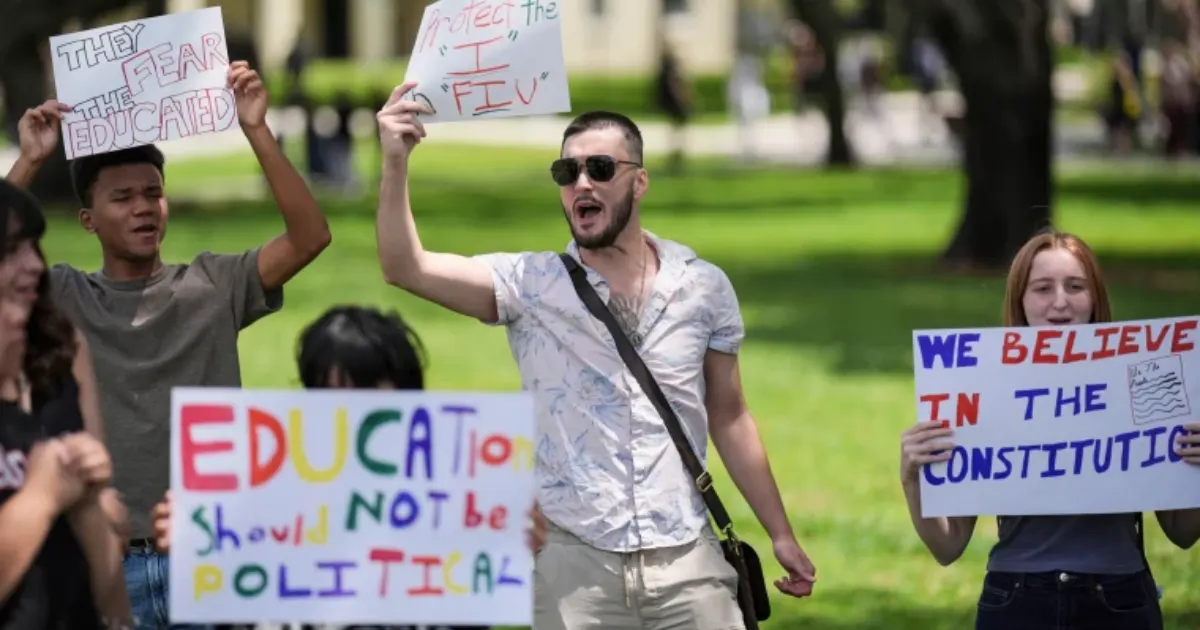

Hey there, if you’ve been following the news lately, you might have caught wind of some pretty intense drama unfolding in the world of U.S. immigration and higher education. Imagine this: thousands of bright, hardworking international students—folks who’ve traveled across oceans to chase their dreams at American colleges—suddenly getting hit with a bureaucratic bombshell that could upend their lives. Their legal status? Gone, just like that. No real warning, no clear reason. But hold on—there’s a ray of hope. A federal judge stepped in and said, “Not so fast.” This ruling is a big deal, and today, we’re breaking it down in plain English. No legalese overload, promise. Whether you’re a student yourself, a parent worried about your kid’s future abroad, or just someone who cares about fairness, this story’s got something for you.
In this article, we’ll chat about what happened, why it matters, and what it could mean moving forward. We’ll keep it real, easy to follow, and packed with the kind of info that sticks. By the end, you’ll feel like you could explain this to your neighbor over coffee. Let’s dive in.
What Sparked This Whole Mess? The Trump Administration’s Crackdown
Picture the scene: It’s early 2025, and President Donald Trump’s administration is in full swing with its immigration agenda. Remember how things heated up on college campuses last year? Protests over everything from global conflicts to free speech lit up schools like Harvard, Columbia, and beyond. The administration saw some of that as a problem—specifically, they zeroed in on what they called “antisemitism” and “illegal behavior” tied to pro-Palestinian activism or even minor run-ins with the law. Enter the Department of Homeland Security (DHS) and Immigration and Customs Enforcement (ICE). They launched something called the “Student Criminal Alien Initiative,” aiming to weed out noncitizens they deemed a risk.
But here’s where it gets wild: In March and April 2025, over 4,700 international students—many on F-1 visas—woke up to emails or notices saying their Student and Exchange Visitor Information System (SEVIS) records were terminated. SEVIS? That’s the government’s database that tracks these students’ legal right to study and sometimes work in the U.S. Without it active, you’re basically persona non grata—schools can’t keep you enrolled, jobs vanish, and deportation looms like a dark cloud.
Why these students? The reasons listed were vague: “failing to maintain status,” “identified in a criminal records check,” or “visa revoked.” Sounds official, right? But dig a little, and it turns out many had no criminal history beyond maybe a traffic ticket or zero involvement in protests. One plaintiff in the lawsuit? A grad student from India at UC Berkeley who’d aced her classes but got flagged because her name popped up in a database glitch. Another was a Brazilian undergrad at NYU whose only “crime” was attending a peaceful rally.
This wasn’t isolated. It felt like a targeted sweep, part of Trump’s broader push for mass deportations and “America First” policies. Universities freaked out—international students make up about 25% of enrollment at places like Harvard, paying full tuition (often $60,000+ a year) without financial aid. Lose them, and campuses empty out, research stalls, and that diverse vibe that makes U.S. schools world-class? Poof.
The Court Steps In: Judge Jeffrey White’s Game-Changing Ruling
Fast-forward to May 22, 2025. Enter U.S. District Judge Jeffrey S. White, a no-nonsense jurist from the Northern District of California (Oakland division). Appointed by George W. Bush back in 2002, he’s got a rep for fairness, not partisanship. A group of about two dozen affected students, backed by immigration lawyers and advocacy groups like the ACLU, sued the feds. They argued the terminations were arbitrary, violated due process, and wrecked lives without justification.
judge blocks trump administration from terminating international students’ legal status—he acted. In a 21-page order, he slapped a nationwide preliminary injunction on the Trump administration. Translation: Stop right there. No more terminating SEVIS records for international students while this case (and similar ones) play out. No arrests, no detentions, no shipping folks across state lines based on these statuses. And hey, if you’ve already reinstated some records? Don’t touch ’em.
White’s words hit hard: The government’s actions “uniformly wreaked havoc” on students’ lives and “likely exceeded their authority and acted arbitrarily and capriciously.” He called out the “whack-a-mole” tactics—where the admin pauses one policy, then sneaks in another to dodge court scrutiny. Basically, “Enough with the games. Give these kids stability so they can study without looking over their shoulder.”
This wasn’t a full victory yet—it’s temporary, pending a full trial. But it bought time for over 6,400 affected students (updated numbers from lawsuits). And get this: It came right after DHS yanked Harvard’s SEVP certification, which would’ve forced 6,000 international students there to transfer or leave. White’s ruling likely pauses that too, at least for now. A separate judge in Boston echoed the sentiment the next day, blocking enforcement against Harvard.
How Does SEVIS Even Work? A Simple Breakdown
Okay, let’s pause for a quick explainer—because if you’re not deep in immigration wonkery, SEVIS might sound like a sci-fi gadget. It’s actually the Student and Exchange Visitor Information System, run by ICE and DHS. Think of it as the government’s Rolodex for over 1 million international students and scholars in the U.S. each year.
Here’s a straightforward table to make it crystal clear:
| Aspect | What It Means | Why It Matters for Students |
|---|---|---|
| F-1 Visa | The main student visa for full-time academic studies (undergrad, grad, etc.). | Lets you enroll in school and work on-campus part-time. |
| SEVIS Record | Your digital “ID card” in the system—must be “active” to stay legal. | Schools report your attendance; if it terminates, you’re out of status. |
| Termination Reasons | Official ones: False info to DHS, violent crimes >1 year prison, or status violations. | Vague flags like “criminal check” aren’t legit—led to the lawsuit. |
| Consequences of Termination | Lose enrollment eligibility, can’t work, risk deportation. | Immediate chaos: Can’t register for classes, jobs evaporate, fear of ICE raids. |
| Reactivation | Possible if error proven, but leaves a scar on your record. | Harder to get future visas or status changes. |
See? Not so scary. International students pay a $350 SEVIS fee just to get in the door, and they enrich U.S. schools with fresh ideas from 200+ countries. When the admin started canceling records willy-nilly, it ignored these rules, sparking outrage.
Real Stories: The Human Side of the Chaos
Numbers are one thing, but hearts? That’s where it gets real. Let’s meet a few folks whose lives flipped overnight.
Take Aisha, a 24-year-old from Kenya studying environmental science at Stanford. She’d been in the U.S. three years, leading a campus sustainability club. One morning in April, her SEVIS pinged “terminated” for a “criminal records check.” Turns out? A parking ticket from freshman year. “I couldn’t sleep,” she told reporters. “Am I going home tomorrow? What about my research on climate refugees—ironic, right?” Her professors rallied, writing letters, but the stress? It tanked her grades and health.
Then there’s Miguel, a Mexican engineering whiz at MIT. No protests for him—just a DUI from a college party two years back, which he’d disclosed and paid for. Termination hit, and suddenly, his internship at a green tech firm? Gone. “I came here to build bridges, literally,” he said in a CBS interview. “Now I’m the one feeling bridged out.”
And don’t forget the ripple to families. Aisha’s mom back in Nairobi sold land to fund her tuition. Miguel’s siblings looked up to him as the trailblazer. These aren’t stats; they’re dreams deferred. Advocacy groups like United We Dream amplified their voices, turning personal pain into public pushback.
Why This Ruling Echoes the 2020 ICE Fiasco
Flashback to summer 2020: Amid COVID, the Trump admin tried forcing schools to go fully online or lose international students. Universities sued, and a judge shut it down fast. Sound familiar? This 2025 saga feels like déjà vu—same playbook, different excuse. Back then, it was “pandemic safety”; now, it’s “campus safety.” Critics say it’s less about protection and more about politics: Shrinking the “foreign” footprint in elite schools Trump often blasts.
But here’s the silver lining: Courts keep saying no. Judge White’s decision builds on that precedent, reinforcing that immigration powers aren’t a blank check. As one lawyer put it, “It’s not about left or right—it’s about right and wrong.”
Bigger Picture: International Students as U.S. MVPs
Let’s zoom out. Why fuss over visas when borders are a hot-button issue? Because international students are gold for America. They pump $45 billion into the economy yearly—tuition, housing, you name it. They start companies (think Google co-founder Sergey Brin, from Russia). They fill STEM jobs where Americans are short. And culturally? Campuses buzz with global perspectives, prepping everyone for a connected world.
Trump’s team argues it’s about security: “No one has a right to a visa,” DHS tweeted post-ruling. Fair point—rules exist for crimes or threats. But mass terminations without due process? That’s not security; it’s scattershot. Even Fox News noted the crackdown ties to “illegal behavior on campuses,” but the judge called BS on the execution.
Reactions: Cheers, Jeers, and What’s Next
The ruling dropped like a mic. Students and schools exhaled—Harvard’s president called it “a vital shield for academic freedom.” Advocacy orgs partied; the admin grumbled about appealing to higher courts. Protests? They simmered down a tad, with organizers saying, “This is progress, but fight on.”
What’s ahead? The case heads to full trial, maybe the 9th Circuit. If appealed to the Supreme Court, expect fireworks—Trump’s justices might lean admin-friendly. Meanwhile, Congress could step up with student visa reforms. For now, students like Aisha are back in class, but the “what if” lingers.
Wrapping It Up: Hope in the Halls of Justice
Folks, this judge blocks trump administration from terminating international students’ legal status—it’s a lifeline. It reminds us that in a country built by immigrants (yep, including many “international students” of yore), fairness shouldn’t be optional. If you’re an international hopeful, chat with advisors early. Parents? Support groups like NAFSA. And all of us? Let’s champion education as a bridge, not a battleground.