

Hey there, folks. Imagine crossing a desert border in the dead of night, heart pounding, chasing a dream of safety or a better life for your family. Now picture getting slapped with extra criminal charges just because you stepped on the wrong patch of sand – one that’s suddenly been labeled a “military zone.” That’s the tough spot hundreds of migrants found themselves in along New Mexico’s southern border. But in a big win for fairness, a federal judge stepped in and dismissed those extra charges. It’s a story that’s equal parts heart-wrenching and hopeful, and it shines a light on how immigration laws, border security, and basic rights can clash in unexpected ways.
If you’re wondering, “What does this mean for migrants’ rights?” or “How did the U.S. military get involved in border patrols?” – stick with me. I’m breaking it all down in plain English, like we’re chatting over coffee. No legalese overload here. By the end, you’ll get the full picture on this New Mexico judge’s ruling, why it matters, and what might come next. Let’s dive in.
The Spark: How New Mexico Became a Military Hotspot
Picture the vast, sun-baked deserts of southern New Mexico – think dusty trails, towering mountains, and a border that’s more line on a map than a fortress. For years, this stretch has been a key crossing point for migrants fleeing violence, poverty, or persecution in Central and South America. But things ramped up big time in early 2025 under the Trump administration’s renewed push for border control.
On April 15, 2025, the U.S. Department of the Interior handed over a whopping 406 square miles of federal land to the U.S. Army. This wasn’t just any land; it was the “Roosevelt Reservation,” a historic strip along the U.S.-Mexico border that’s been public property for over a century. Suddenly, it got a makeover: the “New Mexico National Defense Area.” Stretching about 180 miles from Anapra to the Texas line, this zone – often just 60 feet deep, like a narrow sidewalk along the border wall – was declared an extension of Arizona’s Fort Huachuca Army base.
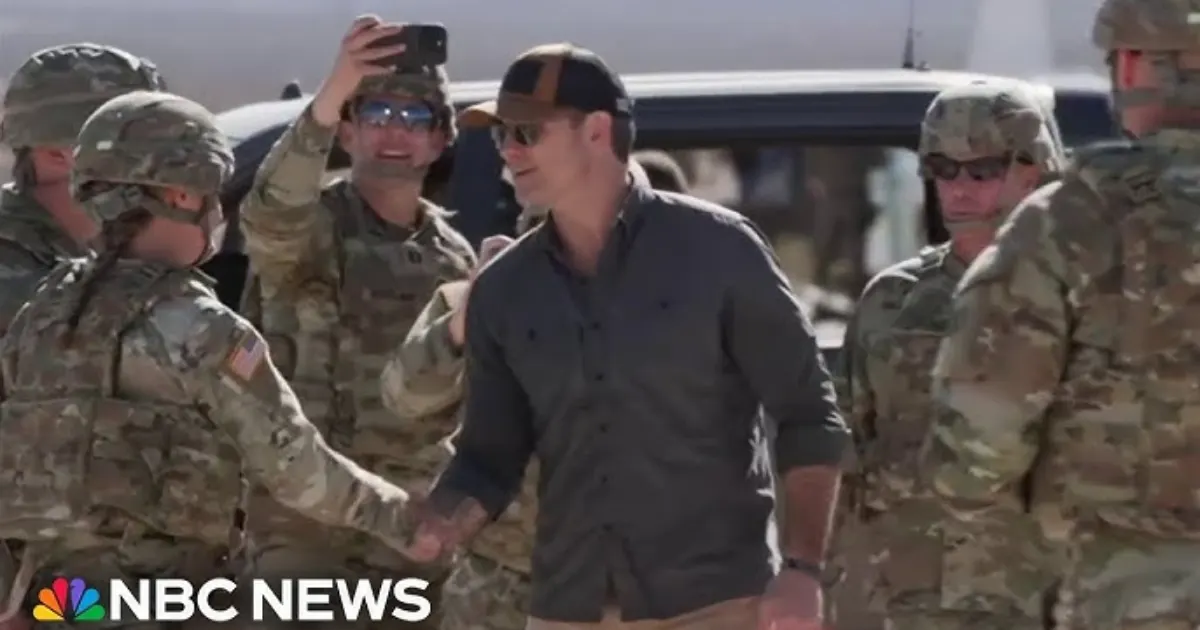
Why? The goal was to beef up security. Defense Secretary Pete Hegseth announced it with fanfare, saying it would give the military “100% operational control” of the border. U.S. troops were authorized to patrol, surveil, and even temporarily detain anyone caught inside. Signs popped up – 199 of them, in English and Spanish – warning: “Restricted Area. Unauthorized Entry Prohibited.” Sounds straightforward, right? But here’s the catch: in rugged terrain with hidden trails and spotty visibility, how do you prove someone knew they were breaking the rules?
By late April, federal prosecutors in Las Cruces, New Mexico, started filing charges. Not just the usual misdemeanor for illegal entry (that’s under Title 8 of U.S. law, with fines up to $5,000 and six months in jail). Nope, they added “Title 50” national security charges: violating military regulations and trespassing on restricted property. These could stack on another six months to a year in prison, plus steeper fines. Over 400 migrants – mostly families, unaccompanied kids, and asylum seekers – got hit with this double whammy. It was a bold move to deter crossings by making every step across the line feel like invading a war zone.
But not everyone bought it. Public defenders cried foul, arguing these charges were overreach without proof of intent. And that’s where our hero of the hour comes in.
Meet the Judge: Gregory Wormuth’s Stand for Common Sense
Enter U.S. Chief Magistrate Judge Gregory B. Wormuth, a no-nonsense jurist in the federal court in Las Cruces. If you’ve ever watched a courtroom drama, Wormuth is the judge who cuts through the noise with sharp questions and fair rulings. Appointed in 2014, he’s handled everything from drug cases to civil rights disputes in this border town courthouse, where immigration matters make up a huge chunk of the docket.
On May 15, 2025 – just a month after the zone’s creation – Wormuth dropped a bombshell. In 98 separate filings (that’s a lot of paperwork!), he dismissed the military trespass charges against a group of migrants who’d just had their initial hearings. He didn’t stop there. By Friday, May 16, he’d greenlit dismissals in at least 120 more cases, with more expected. Assistant Federal Public Defender Amanda Skinner, who argued the cases, confirmed: “Judge Wormuth found no probable cause.”
What was his reasoning? Simple and airtight. Under federal law (specifically, 18 U.S.C. § 2152 for trespass on military land), you can’t just wander in accidentally. Prosecutors had to show the migrants willfully entered the zone, knowing it was off-limits and doing so with “some nefarious or bad purpose.” But the criminal complaints? Wormuth called them out as “virtually identical” – a “cut-and-paste approach” that recycled the same vague facts for hundreds of people.
The government’s big evidence? Those 199 signs. But Wormuth wasn’t impressed. “The mere fact that some ‘signs’ were posted… provides no basis on which to conclude that the defendant could have seen, let alone did see, the signs,” he wrote. Think about it: Migrants often cross at night, through thorny brush or steep hills where signs might be hidden, unlit, or too far off the path. No photos of migrants near signs, no witness statements about visibility – just assumptions. In one order, he laid it out: Prosecutors needed details like sign size, height, wording, distance from the crossing point, lighting, and terrain. They had none.
This wasn’t a slap on the wrist; it was a dismissal “without prejudice,” meaning charges could theoretically be refiled with better evidence. But for now, it’s a huge relief. The migrants still face illegal entry charges and likely deportation hearings, but they’ve dodged the extra jail time that could’ve kept families apart longer.
Wormuth’s ruling echoed across the border too. In El Paso, Texas, Magistrate Judge Miguel Torres tossed out 16 similar cases on May 20, 2025, for the same reasons – lack of proof that migrants knew about the rules.
The Human Side: Stories from the Border That Hit Home
Numbers are one thing, but let’s talk people. Behind those 400+ charges are real lives – parents clutching toddlers, teens escaping gang threats, elders with weary eyes full of hope. Take Maria (not her real name), a 32-year-old from Honduras. She crossed in early May with her 7-year-old son, fleeing domestic abuse. Apprehended just feet into the U.S., she was charged with trespassing on top of illegal entry. “I just wanted safety,” she might say through tears in a detention center interview. “I didn’t see any signs. It was dark, and we were scared.”
Or consider the groups from Guatemala and Mexico, many indigenous folks who speak dialects like Mam or Q’eqchi’. As immigration attorney Carlos Ibarra noted, “Some can’t even read the signs, even if they saw them.” These aren’t “invaders” in army fatigues; they’re everyday heroes enduring 1,000-mile treks through cartel territory.
Local advocates in Las Cruces, like those at the Las Cruces Immigrant Initiative, have been swamped. “We’ve seen families split up over these add-on charges,” says volunteer coordinator Elena Ramirez. “The judge’s decision gives them a fighting chance to focus on asylum claims instead of fighting bogus felonies.” It’s moments like this that remind us: Immigration isn’t abstract policy; it’s about dignity and second chances.
Bigger Picture: Immigration Policy, Military Might, and Legal Fights
Zoom out, and this ruling is a microcosm of America’s border tug-of-war. The Trump administration’s 2025 playbook? Ramp up military involvement. Hegseth’s team deployed Stryker vehicles, surveillance drones, and troops for “temporary detention” – though so far, it’s mostly been spotting and handing off to Border Patrol. The idea: Treat the border like a battlefield to slash crossings, which hit record highs in 2024.
Critics, including New Mexico Democratic Congressman Gabe Vasquez, call it “militarization without transparency.” Vasquez tweeted post-ruling: “The Trump Admin imposed this zone without clear maps or warnings. Families suffer while lawyers sort the mess.” Human rights groups like the ACLU argue it blurs lines between civil immigration violations and criminal acts, potentially violating due process.
On the flip side, supporters say it’s necessary. U.S. Attorney Ryan Ellison’s office, which filed the charges, hasn’t commented much yet, but sources hint at appeals or more signs. “We need operational control,” Hegseth posted on social media. And let’s be real: Border security is a hot-button issue. Polls show 60% of Americans want tougher enforcement, per a 2025 Pew survey, but 70% also support paths to citizenship for Dreamers.
Legally, this could ripple. Wormuth’s orders set precedent for probable cause in trespass cases. If appealed to the 10th Circuit Court, it might test how far “national defense” stretches on civilian land. Plus, it spotlights asylum backlogs – over 2 million cases pending nationwide, leaving migrants in limbo.
To make it crystal clear, here’s a quick comparison table of the charges involved:
| Charge Type | Description | Potential Penalty | Status After Ruling |
|---|---|---|---|
| Illegal Entry (Title 8) | Crossing border without inspection or visa | Up to 6 months jail + $5,000 fine | Still active; leads to deportation proceedings |
| Military Trespass (Title 50) | Willful entry into restricted defense area | Up to 1 year jail + fines (stackable) | Dismissed for lack of proof of knowledge |
| Security Regulation Violation | Ignoring posted military rules | Up to 6 months jail + fines | Dismissed alongside trespass |
See? The extras were the real sting, and now they’re gone – for these cases, at least.
Reactions Pour In: From Cheers to Pushback
The ruling lit up the news wires. The Associated Press led with “Judges Dismiss National Security Charges,” while The Guardian called it a “setback for Trump.” Fox News framed it as a hurdle for border hawks, noting the terrain’s role. Even Military.com admitted: “A judge threw out cases, delivering a blow to the crackdown.”
Advocates cheered. “This upholds the rule of law,” said Skinner in a Reuters interview. But conservatives grumbled. Hegseth vowed to “expand zones” anyway. And everyday folks? Social media buzzed – #BorderJustice trended, with posts from #MAGA accounts decrying “loopholes” and #ImmigrantRights sharing migrant stories.
In New Mexico, where border counties like Doña Ana feel the daily strain, reactions mixed. Ranchers worry about property rights; aid groups praise the humanity.
What’s Next? The Road Ahead for Migrants and Policy
So, where does this leave us? For the 120+ migrants affected, it’s breathing room. They head to immigration court for asylum bids – success rates hover around 30%, but it’s better than stacked criminal records. Prosecutors might refile with photos or witness affidavits, but Wormuth’s bar is high.
Broader? Expect tweaks: More signs, better lighting, maybe even patrols handing out flyers (wild idea, but why not?). Congress could weigh in with border funding bills, and the Supreme Court might eye similar cases down the line.