
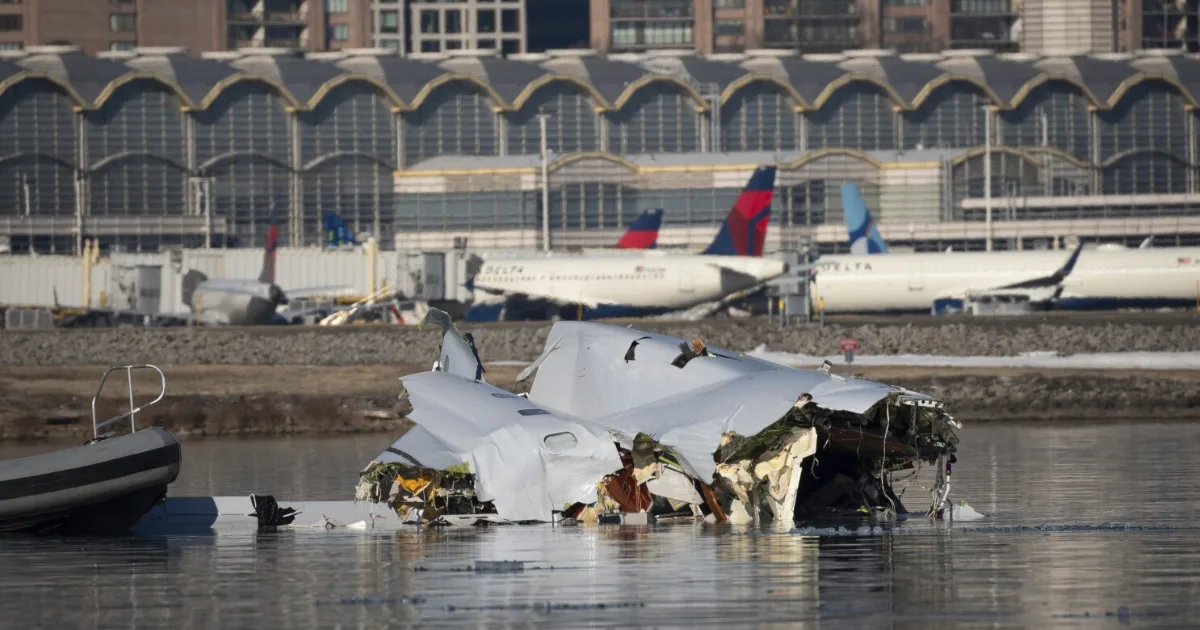

Imagine you’re settling into your seat on a routine evening flight, chatting with the person next to you about weekend plans, when suddenly the sky erupts in chaos. That’s the unimaginable nightmare that unfolded on a crisp Wednesday evening in late January 2025, just outside Washington, DC. An American Eagle passenger plane, carrying dreams and daily commutes alike, slammed into a US Army Black Hawk helicopter in a fiery midair collision. The wreckage plunged into the icy waters of the Potomac River, leaving a nation in stunned silence and families shattered. If you’re searching for details on the “a passenger plane collided with a helicopter in washington, dc, on wednesday.” you’re not alone—this tragedy has gripped headlines, sparking questions about air safety in one of the busiest skies on Earth.
In this easy-to-follow guide, we’ll walk through what happened step by step, like sharing a story over coffee. We’ll cover the shocking moments of the crash, the brave heroes who rushed in, the heartbreaking stories of those lost, and what experts are saying about preventing this from happening again. Stick around—understanding these events isn’t just about facts; it’s about honoring lives and pushing for safer skies. And hey, if you’re flying soon, this might just give you a nudge to double-check those safety briefings.
What Happened? A Timeline of the Washington DC Plane Crash
Picture this: It’s around 8:47 p.m. on January 29, 2025—a chilly Wednesday night with clear skies over the nation’s capital. Folks in Arlington, Virginia, might have been wrapping up dinner or tuning into the news when a deafening roar split the air. American Eagle Flight 5342, a Bombardier CRJ700 regional jet operated by PSA Airlines for American Airlines, was on its final descent into Ronald Reagan Washington National Airport (DCA). The plane had left Wichita, Kansas, earlier that day, ferrying 60 passengers and 4 crew members home after a long haul.
Meanwhile, slicing through the same busy airspace was a Sikorsky UH-60 Black Hawk helicopter from the US Army’s Bravo Company, 12th Aviation Battalion, based at Fort Belvoir, Virginia. This wasn’t some high-stakes mission; it was a standard training flight for the three-person crew, practicing maneuvers in the complex web of airways around DC. Helicopters like these often buzz the skies here, shuttling VIPs or running drills, but rules are strict: They must stay low—below 200 feet over the Potomac—to avoid clashing with incoming jets.
But something went terribly wrong. Eyewitnesses on the ground gasped as the helicopter climbed too high, reportedly to 325 feet, straying into the jet’s path. Air traffic controllers, juggling a hectic night with what one report called “not normal” staffing levels (one person handling two roles), issued urgent calls: “PAT25 [the helicopter’s call sign], do you have a CRJ in sight? Pass behind the CRJ.” The pilots acknowledged, but in a split second, it was too late.
Boom—the collision. A massive fireball lit up the night sky, captured on grainy EarthCam footage that’s now seared into our collective memory. The plane sheared apart, its wings crumpling like paper, before nosediving into the Potomac. The helicopter flipped upside down, shattering on impact. Debris rained down like confetti from hell—seats, luggage, twisted metal—scattering across the dark, freezing river. Within minutes, the once-bustling waterway turned into a grim recovery zone.
To make sense of the sequence, here’s a simple timeline table. Think of it as a quick cheat sheet—no jargon, just the key beats:
| Time (EST) | Event |
|---|---|
| ~8:00 p.m. | American Eagle Flight 5342 departs Wichita, KS, on schedule. Black Hawk helicopter lifts off from Fort Belvoir for training. |
| 8:47 p.m. | Midair collision over Potomac River near DCA Runway 33. Fireball explosion visible from miles away. |
| 8:50 p.m. | 911 calls flood in; air traffic control declares emergency. Planes divert from DCA. |
| 9:00 p.m. | First responders arrive: Fireboats, divers, Coast Guard choppers swarm the site. Potomac’s icy waters (around 35°F) complicate efforts. |
| 10:00 p.m. | Officials confirm no immediate survivors; recovery shifts to body retrieval. |
| Midnight | President addresses nation, calling it a “profound loss.” Families notified via airline hotlines. |
This table sums up the horror in bites—easy to scan if you’re skimming on your phone. But numbers don’t capture the panic: Screams from the plane, the controller’s frantic radio chatter, the splash that echoed like thunder.
The Human Side: Who Were the Souls on Board?
Behind every crash statistic is a story—a kid’s first big trip, a parent’s long-awaited hug, a soldier’s quiet pride. This Washington DC plane crash with helicopter didn’t just claim 67 lives; it stole futures. All aboard perished: 64 from the jet (60 passengers, 4 crew) and 3 from the Black Hawk. No survivors, officials confirmed grimly after scouring the murky depths.
Let’s start with the plane. Among the passengers were over a dozen stars of the ice: Members of the US Figure Skating community heading home from the 2025 Championships in Wichita. Picture vibrant teens like 12-year-old Brielle Beyer, a bubbly National Development Team hopeful whose Instagram brimmed with triple jumps and team spirit. She traveled with her mom, Justyna Magdalena Beyer, a devoted immigrant parent who’d uprooted her life for her daughter’s dreams. Then there were the Livingston sisters—Everly, 14, and Alydia, 11—from Virginia’s Ashburn Ice House. Their family, including hockey-loving dad Peter and super-involved mom Donna, was the heart of their rink community. Friends remember Donna cheering louder than anyone, Peter cracking jokes during practices. Gone in an instant, leaving empty slots on the ice.
Not all were skaters, though. Seven buddies from Kansas were returning from a hunting trip, swapping tall tales about bucks and beers. Russian émigré champs Evgenia Shishkova and Vadim Naumov, who’d coached young talents, boarded too—icons whose medals once dazzled the world. The crew? Seasoned pros: Captains with thousands of hours, flight attendants like the kind who slip you extra snacks. One, a mom of two, texted her husband mid-flight: “Landing soon—love you.”
Now, the helicopter crew—three soldiers whose service defined them. Chief Warrant Officer 2 Andrew Eaves, 39, from Great Mills, Maryland: A “bright star” pilot, family man, and mentor who’d logged missions worldwide. Staff Sgt. Ryan O’Hara, 28, from Lilburn, Georgia: The young gun with a quick laugh, always first to volunteer. And the third, a trailblazing female co-pilot whose name the Army withheld at her family’s plea—she was “driven and hardworking,” born for the skies, once escorting VIPs like fashion icon Ralph Lauren at the White House. These weren’t faceless; they were dads at Little League, daughters making history.
Families’ grief poured out online and at vigils. In Wichita, Mayor Lily Wu called it a “terrible tragedy” uniting Kansas and DC forever. In Boston’s skating club, teammates lit candles for Brielle. And in army bases, buddies raised toasts to Andrew and Ryan. It’s raw, real pain—like losing neighbors you never met.
Rescue and Recovery: Heroes in the Cold
In the crash’s aftermath, the Potomac became a battlefield of bravery. Icy waters, debris fields, and darkness tested first responders like never before. Firefighters from Arlington and DC, Coast Guard divers in thick wetsuits, even brave locals in kayaks dove in. By dawn Thursday, they’d pulled 41 bodies from the river, a somber count rising to all 67 by week’s end.
Recovery wasn’t pretty. Divers navigated twisted wreckage 20 feet down, using cranes and sonar. Fog rolled in Friday, but they pressed on, recovering “black boxes”—the jet’s cockpit voice recorder, flight data module, and the helicopter’s equivalent. These gadgets, tough as tanks, hold the whispers of those final minutes: Pilot chatter, altitude readings, collision alerts.
Air traffic folks at DCA? They watched it unfold on radar, hearts pounding as they vectored other flights away. Staffing woes bubbled up—one controller multitasking, a red flag in hindsight. But kudos to them: No secondary crashes. And shoutout to the unsung—paramedics consoling wailing families at the airport, counselors on hotlines. It’s these folks who remind us: In tragedy’s shadow, humanity shines.
For a quick look at the response phases, check this table. It’s like a roadmap of the rush to help:
| Phase | Key Actions | Challenges Faced |
|---|---|---|
| Immediate (0-1 Hour) | 911 alerts; boats and choppers deploy; airport halts flights. | Dark, cold water (35°F); debris blocking access. |
| Search (1-24 Hours) | Divers probe riverbed; drones scan for floating items. | Icy conditions risk hypothermia for rescuers. |
| Recovery (Day 2+) | Cranes lift wreckage; black boxes retrieved. | Fog and currents scatter evidence; emotional toll on teams. |
| Support | Family notifications; counseling centers open. | Identifying remains amid chaos. |
Simple, right? This setup keeps the big picture clear without overwhelming details.
Why Did It Happen? Unraveling the Washington DC Helicopter Collision Mystery
Okay, deep breath—this part gets technical, but I’ll keep it straightforward, like explaining football to a newbie. The National Transportation Safety Board (NTSB), FAA, and Army are leading the probe, sifting data like detectives. Early clues? The Black Hawk was too high and off-path, breaching rules for Potomac routes. At 325 feet, it popped into the jet’s descent zone—no ifs or buts.
Tech gaps loom large. The plane had TCAS, a collision-avoidance wizard that yells “pull up!” if doom looms. But most military choppers? No such luck. The Black Hawk relied on visual spotting and radio calls—risky in twilight. Communications? Routine, per Transportation Secretary Sean Duffy. Pilots chatted with towers, no breakdowns. Weather? Crystal clear. So, human error? Maybe the helicopter crew missed the jet amid training distractions, or vision issues (investigators are checking night-vision gear).
Broader worries: DC’s skies are a jam-packed freeway. Reagan National handles 100,000 flights yearly, helicopters darting like bees. Past close calls? NASA logs show near-misses with helos on approach. Staffing shortages at towers? A nagging FAA issue. And training routes overlapping commercial paths? Army says it’s routine for VIP hops, but is it safe enough?
President Trump stirred pots, blaming FAA “diversity initiatives”—baseless noise, experts say. Focus stays on facts: Altitude data, voice tapes, radar replays. Full report? Months away, but it’s a wake-up for aviation’s watchdogs.
Remembering and Moving Forward: Lessons from the Potomac Tragedy
As memorials bloom—skating rinks draped in black, army posts flying flags half-mast—we reflect. Vigils in Wichita drew hundreds, sharing laughs through tears over Brielle’s goofy grins or Andrew’s barbecues. American Airlines pledged $1 million per family, counseling too. The skating world? A foundation in victims’ names, funding young talents.