
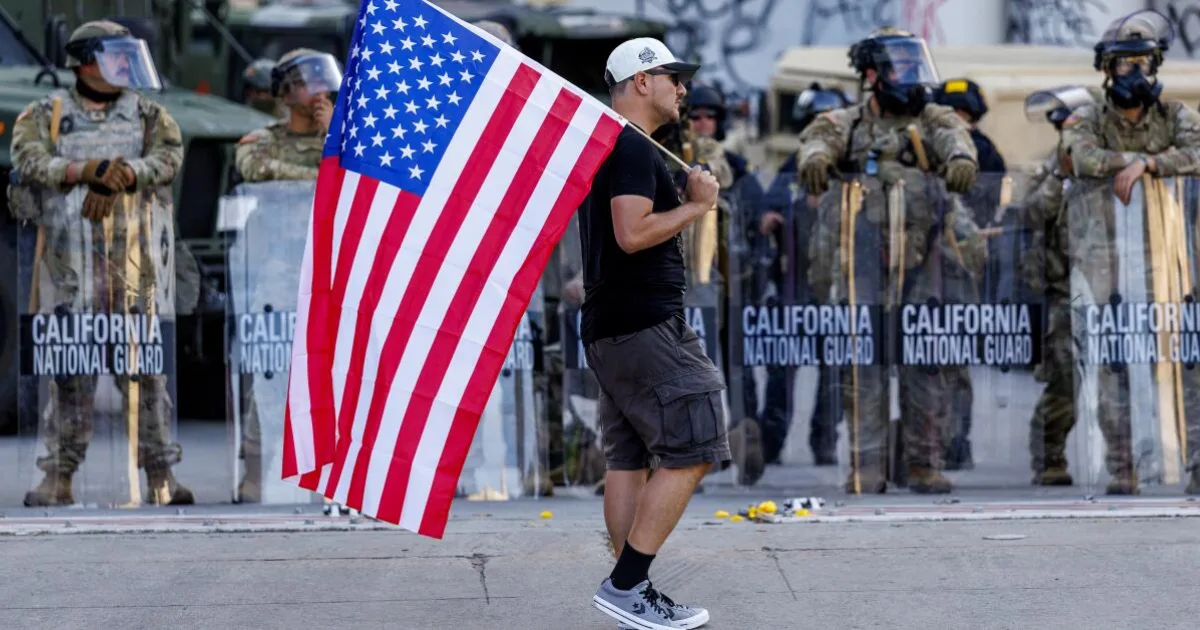

Hey there, folks. Imagine this: You’re going about your day in sunny Los Angeles, maybe grabbing a coffee or walking the dog, when suddenly you see rows of National Guard troops lining the streets. Armored vehicles rumble by, and helicopters hum overhead. It’s not a movie scene—it’s real life from this past summer. And now, a federal judge has stepped in, saying President Donald Trump’s decision to send those troops there was straight-up illegal. Yeah, you read that right.
If you’re scratching your head wondering how we got here, don’t worry. I’m breaking it all down in plain English—no legalese overload, promise. We’ll chat about what happened, why it’s a big deal, and what might come next. Whether you’re a history buff, a parent keeping up with the news, or just someone who likes their democracy drama-free, this story’s got layers. Plus, I’ll toss in a handy table to make the key facts pop. Let’s dive in.
The Spark: Immigration Raids and Protests Rock Los Angeles
Picture Los Angeles in early June 2025. The city, already buzzing with its mix of Hollywood glamour and everyday hustle, erupts into chaos. Why? President Trump’s administration ramps up immigration enforcement big time. ICE agents—those are the folks from Immigration and Customs Enforcement—launch massive raids on workplaces, neighborhoods, and even schools. Families are torn apart, kids separated from parents, and fear spreads like wildfire through immigrant communities.
Protests pop up overnight. Thousands hit the streets, chanting “No Kings!” and waving signs against what they call Trump’s “deportation machine.” Most are peaceful—think marches with families, signs, and songs. But things heat up. A few spots see clashes: Bottles thrown, tear gas fired, some property damage. The media dubs it the “LA Uprising 2.0,” harking back to the 1992 riots, but on a smaller scale.
Trump, never one to back down, sees red. From the White House, he blasts California leaders as “weak” and “soft on crime.” On June 8, he signs an order federalizing the California National Guard—yanking control from Governor Gavin Newsom, a Democrat who’s been vocal against Trump’s policies. Boom: 4,000 Guard troops roll into LA, plus 700 active-duty Marines for good measure. Their job? “Protect federal property and personnel,” says the White House. In reality, they’re patrolling streets, setting up checkpoints, and shadowing ICE agents during raids.
Local folks? Freaked out. Newsom calls it “an unmistakable step toward authoritarianism.” LA Mayor Karen Bass worries about “militarizing our communities.” Protests swell, but so does the tension. Troops in riot gear, faces hidden behind visors, become the new normal. One viral video shows a Guard unit blocking a playground—parents couldn’t even pick up their kids from school. Oof.
This wasn’t just any deployment. It was the first time since 1965—a full 60 years—that a president bypassed a governor to send in the Guard for civil unrest. Back then, Lyndon B. Johnson did it to protect civil rights marchers in Alabama. Here? It felt different. More like a power play.
Enter the Judge: Charles Breyer’s Bold Stand
Fast-forward to September 2, 2025. In a San Francisco courtroom, U.S. District Judge Charles Breyer drops a 52-page bombshell ruling. “Illegal,” he declares. Trump’s move? A willful violation of federal law. Breyer, by the way, isn’t some newbie—he’s a Clinton appointee and brother to retired Supreme Court Justice Stephen Breyer. He’s seen it all, and this? This crossed a line.
Breyer’s words hit hard: “The Trump Administration… deployed the National Guard and Marines to Los Angeles, ostensibly to quell a rebellion… Yet there was no rebellion, nor was civilian law enforcement unable to respond.” He paints a picture of a president building a “national police force with the President as its chief.” Chilling, right?
The judge didn’t mince words on the ground level either. Troops weren’t just standing around—they were directing traffic, controlling crowds, and even helping with arrests. One unit, Task Force 51, got orders to set up “protective perimeters” around ICE ops. But Breyer saw through it: This was the military doing cop work, plain and simple.
And the fallout? Breyer slaps an injunction: No more using Guard or Marines for law enforcement in California. It kicks in September 12, but he stays it briefly for appeals. California jumps in with a request to pull the remaining 300 troops still lingering in LA. Newsom tweets triumphantly: “DONALD TRUMP LOSES AGAIN. The courts agree—his militarization of our streets is ILLEGAL.”
Trump? Furious. In the Oval Office, he blasts Breyer as a “radical left judge” and vows the fight’s on. White House spokesperson Anna Kelly chimes in: “President Trump saved Los Angeles from deranged leftist lunatics.” Ouch. But hey, that’s politics—fiery as ever.
The Legal Lowdown: Posse Comitatus Act Explained Simply
Okay, time for the “why” behind the ruling. At the heart is the Posse Comitatus Act. Say that three times fast—it’s a mouthful, but super important. Passed in 1878 after the Civil War, this law basically says: “Hey, Mr. President, you can’t use the U.S. military like a domestic SWAT team.” Federal troops are for wars abroad or big disasters—not busting jaywalkers or raiding homes.
Why’d Congress make this rule? Back in Reconstruction, troops enforced laws in the South, but it led to abuses. Folks feared a standing army turning on citizens, like in old tyrannies. The Act has exceptions—like if a governor asks for help or during invasions—but Trump’s team tried a loophole: Title 10 authority, claiming a “danger of rebellion” to protect feds.
Breyer? Not buying it. He ruled the protests were “sporadic violence,” not a full-blown uprising. Local cops handled most of it fine. Plus, troops went way beyond “protecting property”—they were enforcing laws, which Posse Comitatus forbids. The judge even called out the Pentagon for “coaching” agencies on how to request help, like a sneaky workaround.
To make this crystal clear, here’s a quick table breaking down the key laws and what they mean:
| Law/Rule | What It Says (In Plain English) | How It Applies Here | Judge Breyer’s Take |
|---|---|---|---|
| Posse Comitatus Act (1878) | Military can’t do civilian police work, like arrests or searches. | Troops helped ICE with raids and crowd control—direct violation. | “Willful” breach; no real “rebellion” justified it. |
| Title 10 Authority | Lets president federalize Guard for rebellions, invasions, or law execution if locals can’t handle it. | Trump used this to bypass Gov. Newsom. | Overreach—protests weren’t that bad; locals had it covered. |
| Insurrection Act (1807) | Broader power for presidents to send troops during riots or unrest. | Not invoked here, but lurking in background. | Unused, but ruling warns against casual military use. |
| California State Law | Governor controls state Guard unless federalized legally. | Newsom sued to regain control. | Won earlier round, but appeals kept troops in play. |
See? Not so scary. This table shows how the pieces fit—and why Breyer’s call feels like a win for checks and balances.
Reactions Pour In: Cheers, Jeers, and Everything In Between
News of the ruling spreads like LA wildfire. Democrats high-five: Newsom calls it a “vital check on executive overreach.” Civil rights groups like the ACLU praise it as a bulwark against “militarized oppression.” Protesters who faced tear gas? They see hope—maybe fewer boots on their necks.
But Trump’s camp? They’re loading up the appeal truck. Defense Secretary Pete Hegseth argues troops “saved lives” and saved the city from “chaos.” Trump himself eyes Chicago next, saying on X (formerly Twitter): “LA was a success—crooked judges won’t stop us from cleaning up crime!” Polls? Mixed. A July CNN survey showed 59% of Americans oppose using Guard for immigration protests without governor OK. But in red states, support’s higher—folks want “law and order.”
Experts weigh in too. Constitutional scholar David Carrillo from UC Berkeley calls it “the most significant modern court look at federal power limits.” Others worry: If appealed to the Supreme Court (with its conservative lean), Trump might win big, setting a precedent for troops in any “unrest.” Imagine that in your town—scary thought.
Communities in LA? Still healing. Immigrant families whisper about moving, while business owners tally protest damages. One shopkeeper told reporters: “Troops made me feel like I was in a war zone, not America.” Kids drew pictures of “scary soldiers” in school. It’s a reminder: These decisions ripple to real lives.
Trump’s Pattern: From DC to Potential Chicago Showdown
This isn’t a one-off. Remember 2020? Trump threatened the military during Black Lives Matter protests. Fast-forward to 2025: He’s already sent Guard to Washington, D.C., to “assist police” amid falling crime rates. federal judge questions legality of trump’s deployment of national guard in los angeles. Critics cry foul—D.C.’s unique, but it smells like testing waters.
Now, Chicago’s in the crosshairs. Trump vows troops there to tackle “urban violence,” ignoring pleas from Mayor Brandon Johnson. Legal eagles predict copycat suits: Blue states like New York or Illinois gearing up? You bet. Red states? Cheering the feds.
Broader picture: Trump’s pushing boundaries on executive power. From border walls to raid surges, it’s “America First” on steroids. But Breyer’s ruling? A speed bump. It forces a pause, reminding us presidents aren’t kings. As one historian put it: “The founders wrote limits for a reason—troops in streets echo the redcoats we fought off.”
What’s Next? Appeals, Politics, and Your Voice
So, where does this leave us? The Ninth Circuit Court of Appeals has a say— they’ve sided with Trump before on the federalization part. If they uphold Breyer, troops pull out by November’s special election. Lose? California appeals to the Supremes, and we wait.