
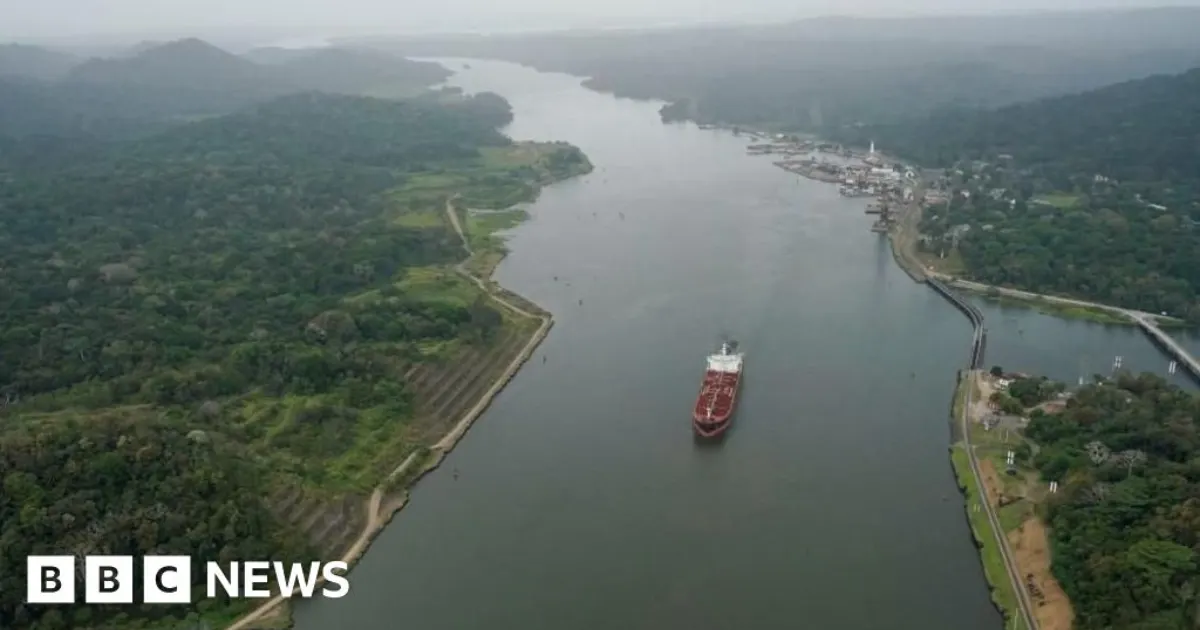

Hey there, have you ever wondered about those massive ships gliding through the panama denies us claims of free passage for its ships through the panama canal like something out of a geography textbook? It’s one of those engineering marvels that connects the Atlantic and Pacific Oceans, saving ships from a long, windy detour around South America. But lately, the canal’s been making headlines for all the wrong reasons—not for its locks or its history, but for a heated spat between the US and Panama. Specifically, Panama has flat-out denied US claims that American government ships can pass through for free. If you’re scratching your head, don’t worry. I’m here to break it down in plain English, like we’re chatting over coffee. No jargon, just the facts, some backstory, and why this matters to everyday folks like you and me.
In this article, we’ll dive into the latest drama, look back at how the canal became a global powerhouse, and explore the bigger picture of international relations. Whether you’re a history buff, a business owner shipping goods, or just someone who loves a good geopolitical story, stick around. By the end, you’ll feel like an expert on why Panama’s saying “no way” to those free-pass claims. And hey, if you’re reading this on your phone while waiting for the bus, it’s all short paragraphs and bullet points to keep things breezy.
The Latest Twist: Panama’s Firm “No” to Free US Ship Passage
Picture this: It’s early February 2025, and the US State Department drops a bombshell on social media. “U.S. government vessels can now transit the Panama Canal without charge fees, saving the U.S. government millions of dollars a year,” they post on X (formerly Twitter). Sounds like a win for American taxpayers, right? But hold on—Panama wasn’t having it. Within hours, the Panama Canal Authority fired back with a statement saying, nope, no changes to fees or rights. It was like watching two neighbors argue over a fence, but with global trade at stake.
Panama’s President José Raúl Mulino didn’t mince words either. During a weekly press conference on February 6, he called the US claim “based on a falsity” and “simply and plainly intolerable.” He even instructed his ambassador in Washington to push back hard. Why the strong reaction? Mulino explained that Panama’s constitution and laws make it crystal clear: No one—not the government, not the canal authority—can just waive fees. It’s not personal; it’s the rules. The authority, an independent body, sets tolls based on ship size, type, and other factors, and they haven’t budged.
This all kicked off after US Secretary of State Marco Rubio visited Panama earlier that week. Rubio met with Mulino and canal boss Ricaurte Vásquez Morales, carrying a message straight from President Donald Trump. The gist? China’s growing influence around the canal is a “threat” to US interests, and something’s gotta give. Rubio later walked back the free-pass claim a bit, saying the US “expects” fee waivers but respects Panama’s legal processes. Still, the damage was done—tensions spiked, and Panama felt painted as a pushover.
To make it even clearer, here’s a quick table breaking down the key statements from both sides:
| Side | What They Said | Date | Why It Matters |
|---|---|---|---|
| US State Department | “U.S. government vessels can now transit… without charge fees, saving millions.” | Feb 5, 2025 | Announced a “deal” after Rubio’s visit, implying quick US wins. |
| Panama Canal Authority | “No adjustments to tolls or fees… but open to dialogue on wartime vessel transit.” | Feb 5, 2025 | Directly refuted the claim, emphasizing autonomy. |
| President Mulino | “Absolute rejection… based on a falsity. It’s intolerable.” | Feb 6, 2025 | Highlighted constitutional limits, showing Panama’s sovereignty. |
| Secretary Rubio | “Absurd to charge fees for a zone we protect… but Panama has processes.” | Feb 6, 2025 | Softened the stance, avoiding full escalation. |
This back-and-forth isn’t just tweet drama; it’s about money, power, and pride. US Navy ships transit the canal about 40 times a year, and fees can add up—think thousands per trip. Waiving them could save big bucks, but Panama sees it as undermining their control.
A Quick History Lesson: From US Build to Panamanian Pride
To really get why this is such a sore spot, we need to rewind. The Panama Canal didn’t just appear— it was a Herculean effort. Back in the early 1900s, the US eyed a shortcut between oceans to boost trade and military might. After France tried (and failed miserably, with thousands dying from disease), President Teddy Roosevelt jumped in. From 1904 to 1914, American engineers, workers, and sheer grit carved out the 50-mile waterway. It opened in 1914 with fanfare—ships zipping through locks that lift them 85 feet above sea level. Imagine that: No digging a full sea-level canal because mountains got in the way, so they built these massive stair-step gates instead.
For decades, the US ran the show. Panama, a young nation (independent from Colombia in 1903 with a nudge from the US), leased the canal zone for peanuts—$10 million upfront and $250,000 yearly. But resentment brewed. Panamanians felt like second-class citizens in their own backyard. Protests erupted in the 1960s, with riots in 1964 leaving dozens dead. Fast-forward to 1977: Presidents Jimmy Carter and Omar Torrijos signed treaties promising a handover. By 1999, full control shifted to Panama. Trump? He’s called it “a big mistake” more than once.
Here’s a simple timeline table to visualize the canal’s journey:
| Year(s) | Key Event | Impact |
|---|---|---|
| 1904-1914 | US builds the canal; 5,600 workers die from accidents and yellow fever. | Establishes US dominance in global trade routes. |
| 1977 | Torrijos-Carter Treaties signed; gradual handover planned. | Eases tensions, promises neutrality for all nations. |
| 1999 | Full control to Panama Canal Authority (ACP). | Panama gains revenue—over $2 billion yearly now. |
| 2025 | Trump revives threats; China influence claims heat up. | Sparks denial and diplomatic dust-ups. |
That handover wasn’t just paperwork. The treaties guarantee the canal’s “permanent neutrality,” meaning it’s open to all ships in peace or war, without discrimination. But the US kept rights to defend it if attacked. Enter today’s drama: Trump argues high fees and Chinese ports nearby violate that spirit. Panama? They point to the treaties and say, “We’ve honored our end.”
Why the US Cares So Much: Trade, Security, and That China Angle
Let’s be real— the Panama Canal isn’t some quaint waterway; it’s the artery of world trade. About 14,000 ships pass through annually, carrying 5% of global maritime traffic. For the US, it’s huge: Over 50% of transits involve US ports. Think fruits from Chile, oil from Alaska, or cars from Japan—all cheaper and faster thanks to this shortcut. Disruptions, like the 2023 drought that slashed passages, spike prices everywhere (remember higher grocery bills?).
But for Uncle Sam, it’s also about muscle. The US Navy relies on quick Pacific-Atlantic hops for deployments. Free passage would ease budgets strained by endless ops. Trump’s beef? He says Panama’s charging “exorbitant” rates—up to $500,000 for big container ships—and letting China creep in. Chinese firms run ports on both ends (Balboa and Cristobal), part of Beijing’s Belt and Road Initiative. Trump fears a crisis where China could “close” the canal to US ships. Panama and China deny it, calling it fear-mongering. Mulino even announced pulling out of Belt and Road post-Rubio’s visit, but insisted it was their call.
China’s foreign ministry jumped in too, slamming US “irresponsible remarks” and defending fruitful ties. It’s a three-way tango: US wants leverage, Panama wants cash and respect, China wants influence. As Rubio put it, the US built it, defends it—why pay? Fair point, but Panama counters: We run it now, and fees fund expansions like the 2016 lock upgrades that handle mega-ships.
Panama’s Side: Sovereignty, Economics, and Standing Firm
From Panama’s view, this feels like bullying. They’ve poured billions into modernizing the canal—new locks, reservoirs to fight droughts. Tolls aren’t greed; they’re survival. In 2024 alone, the ACP raked in $4.9 billion, funding jobs, infrastructure, and even water for locals. Waiving US fees? It’d set a precedent—next, who’d get a discount? Plus, it’s illegal under their laws.
Mulino’s tone was fiery but diplomatic: Open to talks on prioritizing US warships (they already get slots), but no free rides. Protests erupted during Rubio’s visit—signs reading “My country, my sovereignty, my canal.” It’s a national symbol, like the Eiffel Tower for France. Handing back control was a victory after colonial scars; now, threats to “take it back” sting.
Economically, Panama’s booming. The canal employs thousands, boosts tourism (ever seen those lock-view cafes?), and draws investors. But US pressure could scare them off. As one analyst noted, it’s “diplomacy by tweet,” risking alliances in Latin America.
The Bigger Picture: Global Trade, Treaties, and What Happens Next
Zoom out, and this is classic great-power chess. The canal embodies globalization—efficient, vital, fragile. Climate change threatens with droughts; geopolitics with saber-rattling. Trump’s threats (he’s mused about military options) echo 1989’s US invasion to oust Noriega. But treaties bind hands—violating neutrality could isolate the US.
For businesses, uncertainty hurts. Shipping rates fluctuate; delays cost millions. Consumers? Higher prices on imports. Environmentally, the canal’s thirsty—each transit guzzles 50 million gallons of freshwater. Future talks might focus on that, not just fees.
So, what’s next? Dialogue, hopefully. Panama’s open to prioritizing US military transits without waivers. Rubio’s walk-back suggests cooling. But with Trump’s style, expect fireworks. China watches closely, courting neighbors.
Wrapping It Up: A Canal for All, Not Just the Powerful
At its heart, the panama denies us claims of free passage for its ships through the panama canal is about fairness—who owns what, who pays, who decides. Panama denying free passage claims isn’t pettiness; it’s protecting hard-won independence. The US push reflects real stakes in a multipolar world. For us regular folks, it’s a reminder: Global goodies like cheap bananas rely on these watery highways, but so does peace.